About "Soaks"
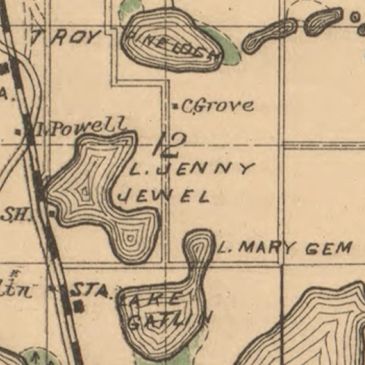
Location
Architecture
Architecture
Tucked away just three miles south of the Orlando's downtown skyline, the Southern Oaks neighborhood stands as one of Orlando’s hidden residential gems. It seamlessly captures a vintage charm while remaining intimately connected to the pulse of modern city life. Named for the historic oak groves that once dominated this pocket of South O
Tucked away just three miles south of the Orlando's downtown skyline, the Southern Oaks neighborhood stands as one of Orlando’s hidden residential gems. It seamlessly captures a vintage charm while remaining intimately connected to the pulse of modern city life. Named for the historic oak groves that once dominated this pocket of South Orlando, the community of 236 homes still lives up to its moniker, characterized by quiet, tree-lined streets, generous lots, and a sense of established tranquility that is increasingly hard to find.
Bordered by Lake Pineloch to the North, the neighborhood offers a picturesque backdrop where the rhythm of daily life is distinctly relaxed. It is a place where neighbors stroll under a canopy of Spanish moss along winding sidewalks.
One of the geographically interesting facts about Southern Oaks is that it lies within the limits of the City of Orlando, surrounded completely by Orange County land. The founders and early residents of the neighborhood were movers and shakers, some with positions of power in local politics. They wanted the services of the City of Orlando including utilities, fire, and police. Thus they carved out Southern Oaks as an island of Orlando. It is also the reason why there are no power lines within the neighborhood. The builders wanted everything underground and got it.
Historically, the area surrounding Southern Oaks is ground zero for what would eventually become Orlando. Settlers traveled from Ft. Mellon, to Ft. Maitland, to Ft. Gatlin. Ft. Gatlin was an important location due to its position between three lakes, making it highly defendable against attacks from Natives. The roads of Summerlin, Baxter and Osceola follow a curve made by deer. Natives followed them on hunts creating a footpath that would eventually be used to pave roadways for modern vehicles. In essence, when you are driving from Southern Oaks to the grocery store, you are following the path Natives used to hunt their food.
While Southern Oaks feels like an isolated sanctuary, its geographic convenience is unmatched. Positioned in the thriving SoDo (South of Downtown Orlando) District and adjacent to Ft. Gatlin, residents are mere minutes from highly-rated medical centers (including Orlando Health), Orlando's world class performing arts center and arenas, coffee shops, restaurants, grocery stores, and A-rated schools.
The neighborhood draws immense value from its placement in highly sought-after school zones, routing students toward top-tier institutions like William R. Boone High School and Pershing Elementary. Furthermore, quick access to major corridors like Interstate 4 and the standard commuter routes means that whether you are heading to a business meeting downtown, commuting to the airport, or spending a day at the theme parks, the entire Central Florida region is effortlessly within reach.
In a city rapidly expanding outward, Southern Oaks remains a crown jewel: a beautiful oasis from a bygone era with access to everything that the most visited city in America has to offer.
Architecture
Architecture
Architecture
There is a beautiful architectural story woven into the homes of Southern Oaks. The neighborhood is not defined by a single architectural style, but by a distinct era of Florida residential design, a period when homes were built with a sense of permanence rather than uniformity.
With development beginning in the late 1960s, Southern Oaks
There is a beautiful architectural story woven into the homes of Southern Oaks. The neighborhood is not defined by a single architectural style, but by a distinct era of Florida residential design, a period when homes were built with a sense of permanence rather than uniformity.
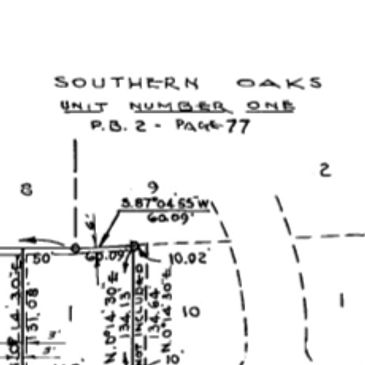
With development beginning in the late 1960s, Southern Oaks reflects the transition in American residential architecture from the post-war ranch era into larger custom homes of the 1970s and 1980s. The neighborhood’s first recorded home, at 1201 Montcalm Street, was built in 1969, establishing the architectural foundation for what would become a community of approximately 236 homes.
Unlike the uniform, cookie-cutter developments that characterize newer suburbs, Southern Oaks is a rich tapestry of architectural history. The neighborhood boasts a diverse range of traditional and modern aesthetics including French provincial, mid-century, traditional ranch, modern, and neo-classical homes. The result is a diverse collection of custom designed homes.
Many different architects and builders developed the homes within Southern Oaks which helped create the diverse aesthetic seen today. Perhaps the most prominent builder was Michael Ashington-Pickett. A native of England, he came upon a beautiful home in the South of France which inspired him to recreate its style in what became 1307 Montcalm St. This home was one of the earliest built in Southern Oaks. He lived there with is wife, Sandra and children Michael and Claire until his passing in 2025. He was so enamored with the French Provincial style, that he used it on several homes in the neighborhood. If it has a mansard roof, there's a good chance Michael built it. More modern home designs like those seen in 3332 Stonewood Ct. and 903 Ridgecrest Rd. were built by Mario Prieto of Capri Homes. Those homes are composed of several interlocking horizontal volumes combining modernism with Wrightian influences.
Perhaps the defining architectural feature of Southern Oaks is not the homes themselves but the relationship between the homes and the land. The neighborhood was built around mature live oaks, large front lawns, spacious setbacks and in some cases, lakefront views. The builders of the neighborhood understood the importance of having harmony between function and quality of life.
The appeal of Southern Oaks is that it represents a disappearing era of Orlando development. Many newer neighborhoods prioritize maximum density, smaller lots, repetitive floorplans, and limited landscaping. Southern Oaks represents the opposite philosophy with lots large enough for gardens, pools, and outdoor living, sidewalks designed for enjoyment, and architecture with personality.
The result is a neighborhood that feels less like a subdivision and more like a collection of individually crafted homes.
Oak Trees
Architecture
Oak Trees
Drive along the neighborhood's winding residential roads and it becomes immediately apparent that Southern Oaks was built differently. The neighborhood was not carved out of the landscape and then replanted with ornamental trees after construction. Instead, many of its streets and sidewalks were laid out to preserve mature trees whenever
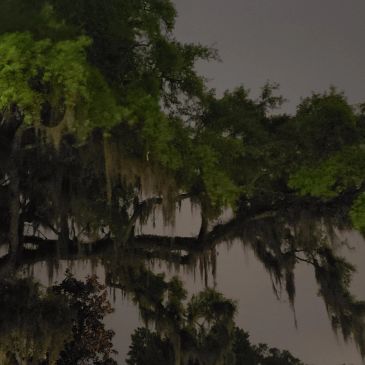
Drive along the neighborhood's winding residential roads and it becomes immediately apparent that Southern Oaks was built differently. The neighborhood was not carved out of the landscape and then replanted with ornamental trees after construction. Instead, many of its streets and sidewalks were laid out to preserve mature trees whenever possible, allowing sidewalks to gently curve around trunks and root systems rather than forcing the trees to conform to perfectly straight lines.
That philosophy has become one of Southern Oaks' defining characteristics. It is a neighborhood built around trees.
The Southern Live Oak (Quercus virginiana) is one of Florida's most iconic native trees. Unlike many deciduous trees, live oaks remain green throughout the year, replacing their leaves gradually so they are rarely bare. Mature specimens commonly reach 60 to 80 feet in height, but their true beauty lies in their extraordinary spread that often extends 60 to well over 100 feet across.
These broad, sweeping canopies transform streets into shaded corridors. During Orlando's long summers, the difference is tangible: shaded pavement can be dramatically cooler than pavement exposed to direct sunlight, making neighborhood walks more comfortable while reducing heat absorbed by streets and sidewalks.
In Southern Oaks, the canopy is more than scenery—it's infrastructure.
Sadly, the trio of hurricanes that struck Southern Oaks in the early part of the century took out a massive amount of trees, and the gentle curves of the sidewalk around them remain as visible reminders of an earlier time when Southern Oaks was a veritable forest. Many neighbors have yet to replace those fallen oaks, or replaced them with different species.
Not all trees are created equal. A mature live oak offers a broad, cathedral-like canopy that shades entire streets. They have exceptional wind resistance when healthy and properly maintained. They have long life spans measured not in decades, but often in centuries.
Where a live oak spreads outward to create a vast umbrella of shade, magnolias, crape myrtles, and other species of trees tend to grow more vertically with a narrower canopy. They are ideal as accent trees near entrances, gardens, or focal points in a landscape, but they simply cannot provide the same neighborhood-wide canopy effect that defines us.
A street lined with mature live oaks becomes unforgettable and is the reason Southern Oaks feels like Southern Oaks.
Heritage Oaks of Soaks
As part of the "RESTORE OUR CANOPY" initiative where we will aim for a community wide planting of 100 new live oaks, we will also be identifying the 20 largest live oaks in the neighborhood, estimating their ages (many predate the subdivision by decades), measuring trunk circumference, canopy spread, and telling the story of each.
Proximity
What you need and what you want,
effortlessly within reach.